
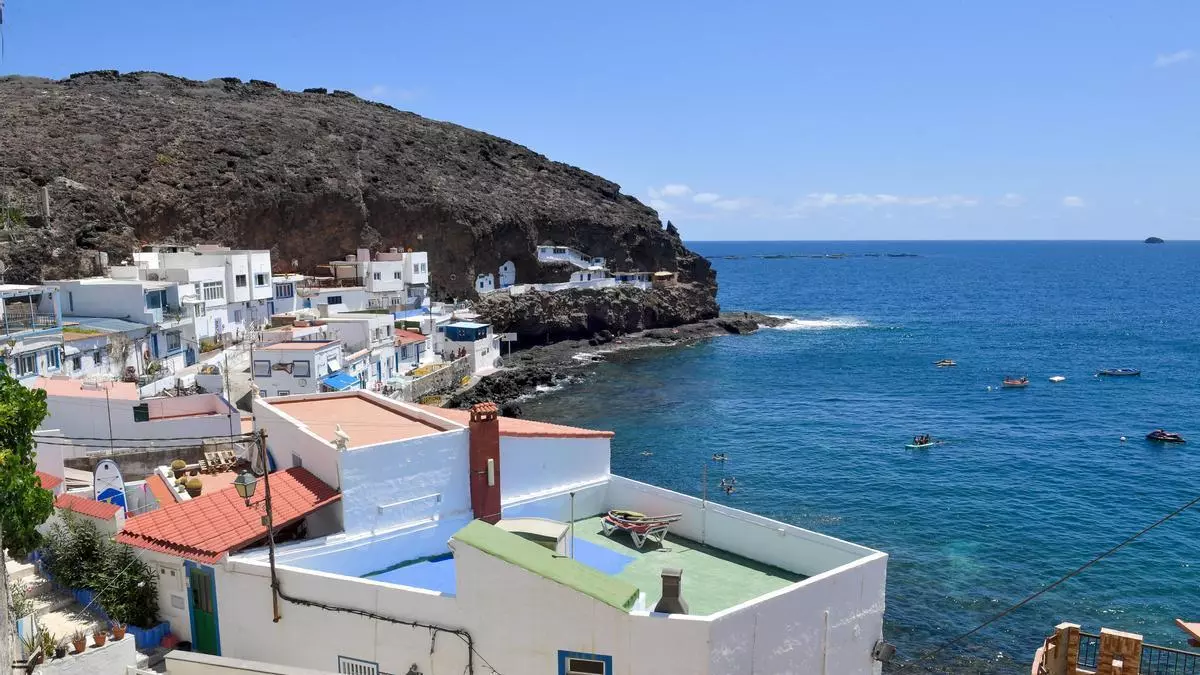
Providing public services and security to natural tide pools, consolidating the stability of beach kiosks and sunbeds with four-year permits, legally protecting surf waves, and safeguarding historic coastal settlements under strict boundaries to prevent uncontrolled urban development. With these premises begins the public consultation phase of the draft bill for the Canary Islands Coastal Law, an initiative designed to exercise self-government over the coastline.
The text stems from Article 157 of the 2018 Statute of Autonomy, which grants the Autonomous Community exclusive competencies over coastal planning and management. Following the transfer of coastal management responsibilities in 2022, the Spanish State nevertheless retained ownership of the maritime-terrestrial public domain and the approval of official boundary demarcations. The current Canarian Government considered that these reservations limited the scope of the transferred powers. In response, the draft bill aims to develop a dedicated regulatory framework to organize and manage the Archipelago’s 1,526 kilometers of coastline.
Threatened coastal settlements
The draft assigns a special regime to around 80 traditional coastal settlements (threatened by national legislation) to protect the social, historical, and cultural heritage of communities established decades ago along the sea and tied to fishing, maritime activities, or coastal leisure. To this end, it foresees the creation of a regional census of settlements and structures possessing historical, architectural, cultural, ethnographic, or picturesque value. This inventory will serve as the foundation to urbanistically plan these enclaves and evaluate the status of their buildings.
The regulation enables municipal councils to plan these settlements through special protection plans, aimed at preserving and sustaining existing structures, facilitating the provision of basic services, and allowing maintenance, conservation, and rehabilitation works. Simultaneously, it establishes strict boundaries to prevent expansion beyond consolidated settlement areas and halt building sprawl.
The framework also includes the option to request from the State the declassification of land that has lost the characteristics justifying its inclusion in the maritime-terrestrial public domain, as well as promoting the legalization of buildings under national coastal legislation. Furthermore, if rising sea levels or other natural conditions make it necessary to relocate any of these settlements, the process must involve the affected residents and prioritize a location near the original settlement, provided it is technically and economically feasible and preserves comparable urban planning and building conditions. The regulation also recognizes the continuity of traditional practices, such as fishing and shellfish gathering.
Streamlining: responsible declarations
To resolve disagreements with the central State regarding the management of concessions in the maritime-terrestrial public domain, including those related to their termination such as expiration, Article 50.2 establishes a consultation period lasting a maximum of one month to attempt to reach an agreement. If no consensus is reached, the Canary Islands will proceed with the administrative procedure and issue the corresponding resolution. For its part, Article 12 assigns the autonomous administration the authority to grant, modify, and revoke these titles.
The draft bill also outlines a distribution of responsibilities among the regional Government, island councils (cabildos), and municipal councils. The law seeks to simplify and streamline administrative procedures, avoiding duplicate processes for obtaining permits. Minor works and repair, modernization, or conservation actions on legal structures located within the protection easement area—provided they do not increase in volume, height, or surface area—may be processed via a responsible declaration submitted to the relevant town hall.
Managing the water body is another core pillar of the draft bill. The law incorporates the spatial planning of activities in the Canarian maritime space and contemplates occupying marine areas for facilities linked to renewable energy, including offshore wind and tidal energy.
Beach authorizations move away from the phrase “seasonal services” and will now be organized through beach service projects, designed for continuous operation throughout all twelve months of the year. Their general validity will be four years, aiming to provide stability for kiosks, sunbeds, and nautical activities.
The draft bill confers legal recognition on natural bathing pools and tide pools, which may feature adapted access points, shaded areas, restrooms, and food outlets, as well as facilities necessary for safety and accessibility. These amenities may be designated as public works of island interest. Additionally, waves and surf breaks declared of island interest will receive special protection as natural and sporting heritage, recognizing the general compatibility of surfing and windsurfing with their conservation.
The text also regulates sports and recreational uses. Island councils will be able to designate anchorage and diving zones through their planning instruments, taking into account carrying capacity and compatibility with other activities, particularly fishing.


